Anfal – eight lives, one genocide
- Format
- Documentary
- Status
- In production
- Year
- 2026
- Running time
- 83 min
- Production countries / regions
- Germany
- Filming locations
- Kurdistan
- Original languages
- Kurdish
- Subtitles
- German, English
- Shooting format
- Digital
- Screening format
- DCP, ProRes, MP4 (H.264)
- Resolution
- UHD (3840 × 2160)
- Aspect ratio
- 1.78:1 (16:9)
- Colour
- Colour
- Sound
- 5.1, Stereo
Press textWord
Synopsis
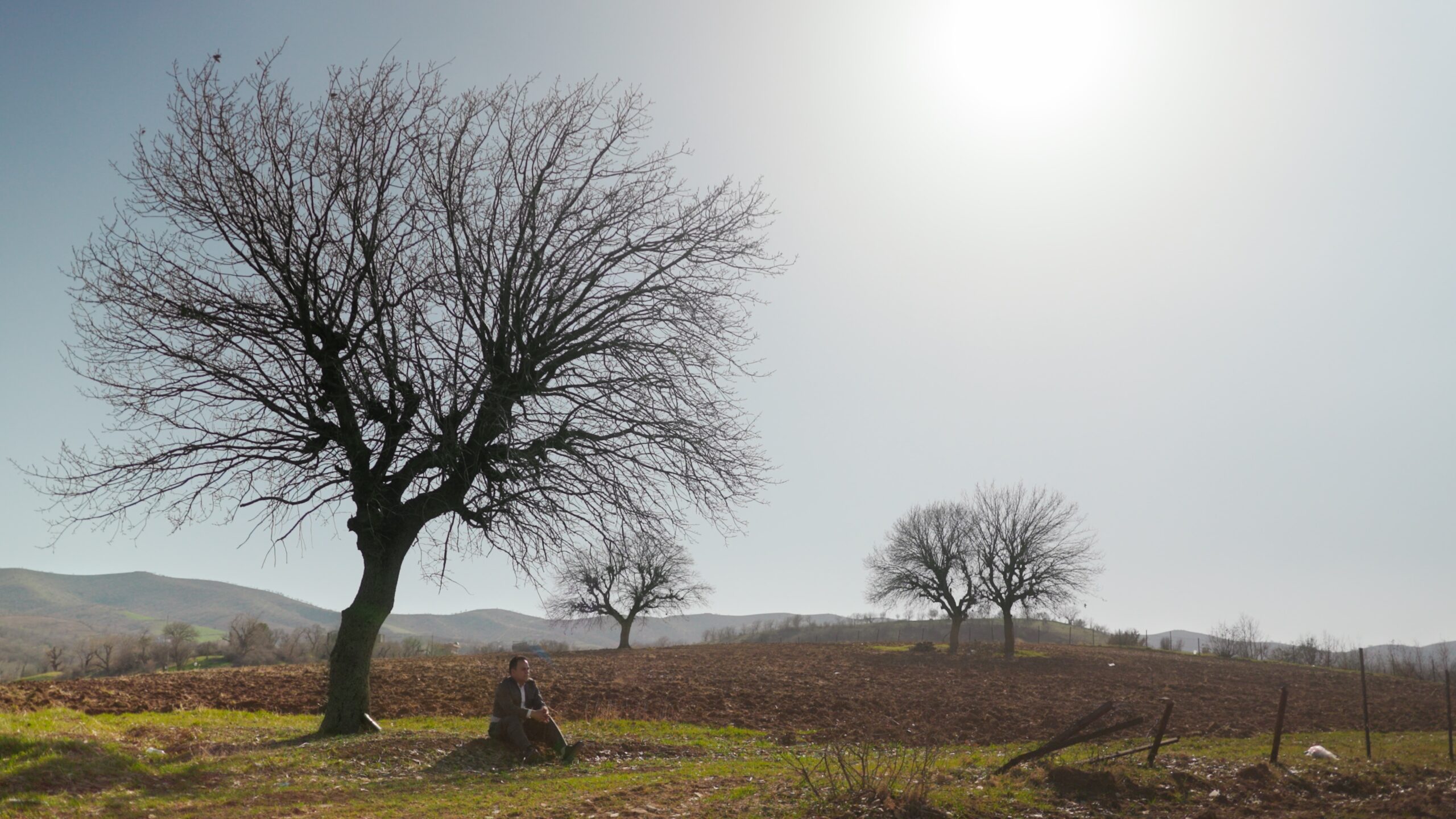
Eight voices rise up against the silence in the green hills, devastated villages and deserted valleys of southern Kurdistan (northern Iraq). Eight survivors from various parts of the region tell their own personal stories of the eight phases of the Anfal operation—a systematic military act of destruction against the Kurdish population carried out by the Iraqi Ba'ath regime in 1988.
“Anfal—eight lives, one genocide” creates space for collective memories, which speak a universal language, beyond this specific context, of survival, trauma and dignity.
Director’s statement
With this film I wish to give the survivors of Anfal a voice—not as victims, but as conveyors of dignity, resistance and the power to survive. Their stories are not only in the past. They live on—in bodies, in landscapes and in voices. They speak not only of suffering, but also of continuing, of remembering and new beginnings.
The genocide of the Kurds of southern Kurdistan (northern Iraq) is seared deep in our collective memory. It is not a closed book. It is not past. It continues to have an effect—in the memories, in the scars, in the ruins, in the dreams of the survivors. Anfal 1988 was an attempt to wipe out an entire ethnic group. But it wasn’t the only one. In 2014, thousands of Yazidis in Shingal were murdered and women enslaved by the IS. In Rojava (western Kurdistan/Syria) the IS and Turkish drones bomb Kurdish cities to this day. Language, culture and bodies have been suppressed in northern Kurdistan (Türkiye) for more than a century. The story repeats itself—sometimes quietly, sometimes loudly. Oppression isn’t an abstract term in Kurdistan. It is commonplace, tangible, ubiquitous—no matter if it’s in the east, west, south or north. The methods may be different, but the goal is often the same: breaking our identity, controlling our lives, eradicating our existence.
I would like to create visibility for southern Kurdistan—for a crime that doesn’t get enough attention. I want to build bridges—between the past and the present, between Kurdistan and the world. And I want to give hope—that the process of remembering does not have to paralyse, but can instead bring liberation.
In my opinion—and in the face of multiple crises today—the message of this film is more relevant than ever. The world is again experiencing an escalation in violence, dehumanisation and mass expulsions—in Gaza, Syria, Afghanistan and elsewhere. The Middle East is burning—and with it our humanity. The catastrophes of today are reminiscent in many ways of the unheard tragedies of yesterday. With this film I hope to sensitise, before the silence once again becomes louder than the outcry. Anfal wasn’t a one-off—it was part of a pattern. And this pattern is beginning to show itself again.
This film is my act of resistance—against forgetting, against systems that want to eliminate what we are, against fascism and Islamism, which have wiped out the lives of hundreds of thousands of people. This film is a space in which the voices they hoped to silence are heard again.
Production & Funding
- Production
- Kunsthochschule für Medien Köln
- Funded by
- Film- und Medienstiftung NRW
Credits
- Protagonist
- Najiba Faqe, Beybun Mary, Hassan Alli, Mohammad Hamid (Hama Nugra Salman), Salma Mohammad & Shaxawan Mohammad, Kwestan Rashid, Kareem Nayib, Ali Havil
- Writer
- Hesam Yousefi
- Director
- Hesam Yousefi
- Cinematography
- Warman Saeed
- Sound
- Edris Abdi
- Editing
- Hesam Yousefi
- Production manager
- Hawkar Salih, Jalal Mohammad
- Producer
- Hesam Yousefi
- Sound designer
- Jenny Winter
- Audio Mix
- Judith Nordbrock
- Color grading
- Ewald Hentze
Supported by
- Film- und Medienstiftung NRW